Can Small Online Marketplaces Take on the Giants? Prof. Le Texier Weighs R&D Cooperation Against MergersPublished Time:2026-11-24 Views No.:
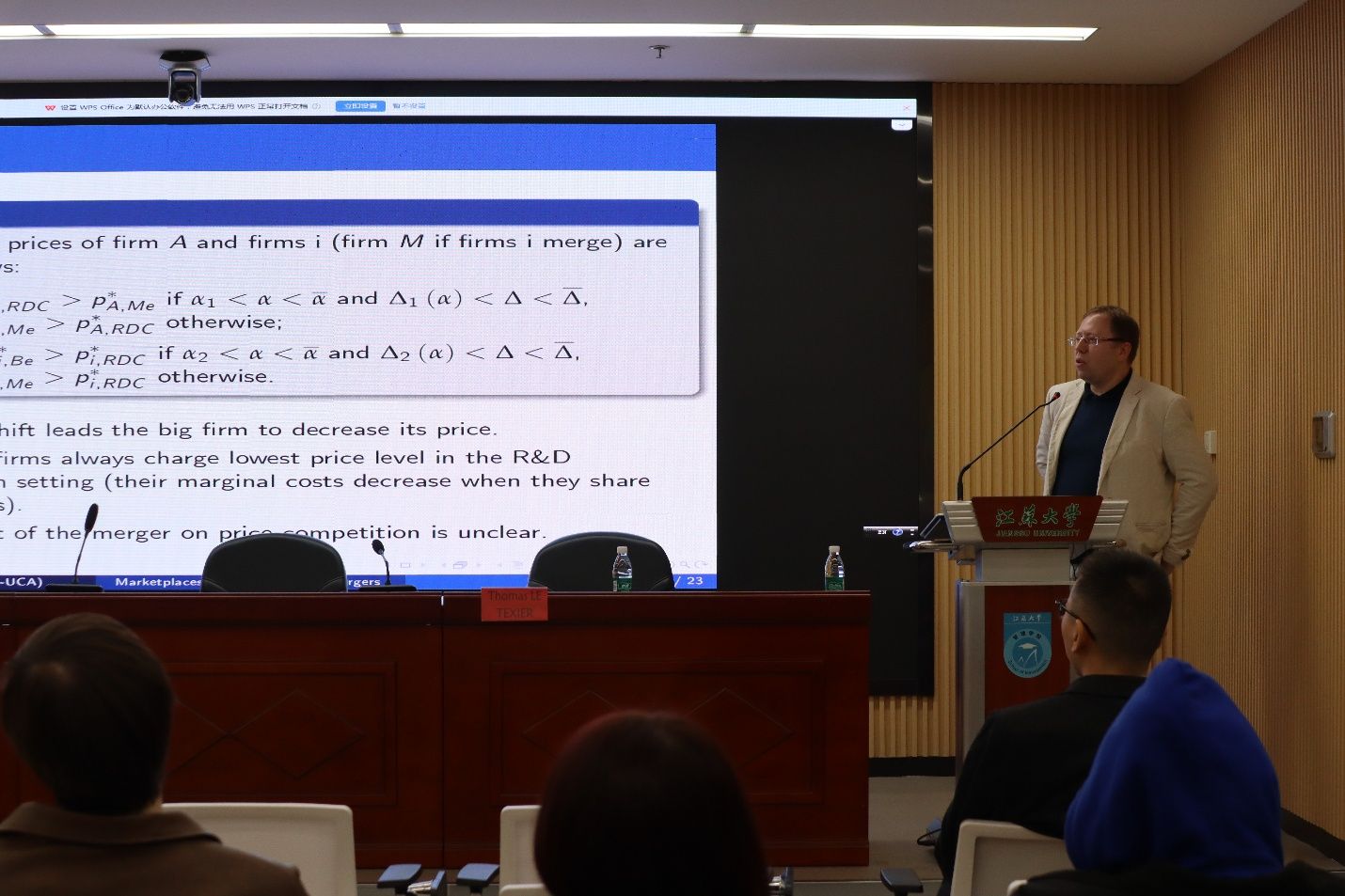
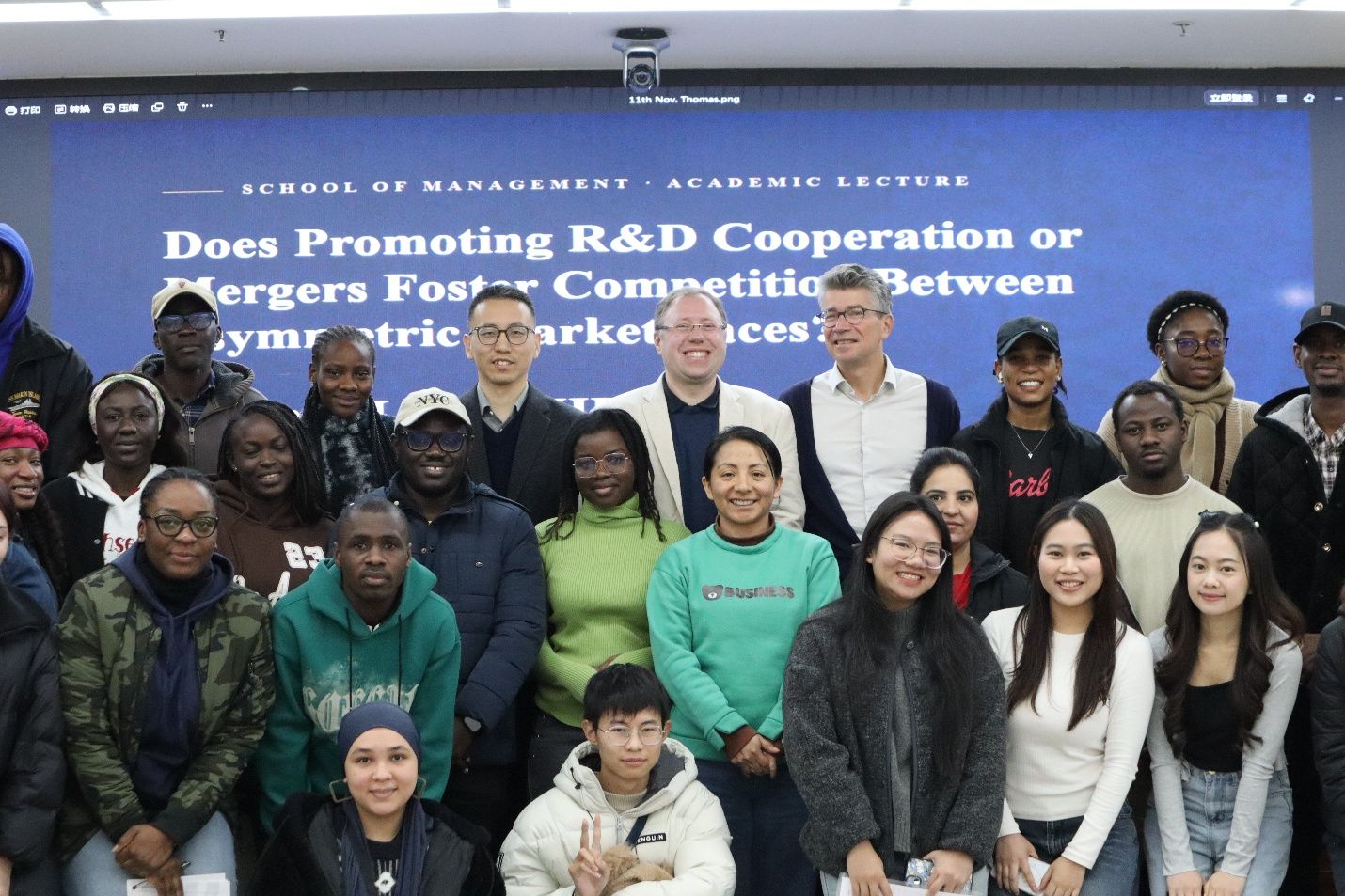
On November 11, 2026, the second and final session of the School of Management’s two-day lecture series took place. The speaker was Dr. Thomas Le Texier, Associate Professor of Economics at the University of Rennes and a research fellow at CREM, CNRS, whose work covers platform competition and regulation, the economics of AI and digital industries. He took up a question at the heart of today’s digital economy: how can small national online marketplaces compete with a dominant international platform?
Prof. Zhiwen Li chaired the session. The audience again brought together PhD candidates from several departments of the University, master’s students in Management Science and MBA students. Presenting joint work with Prof. Dominique Torre of Université Côte d’Azur, which he described as research still in progress, Dr. Le Texier modeled a market in which one big international marketplace competes against two small national ones. He compared three situations: the status quo, R&D cooperation among the small firms, and a merger between them. Either route, he showed, helps the small marketplaces win market share and profit, although the big firm responds by cutting back its own R&D. R&D cooperation emerged as the most favorable arrangement for consumers, while the case for a merger depends on how far it erodes the big firm’s advantage. The effect on overall welfare, he cautioned, is ambiguous.
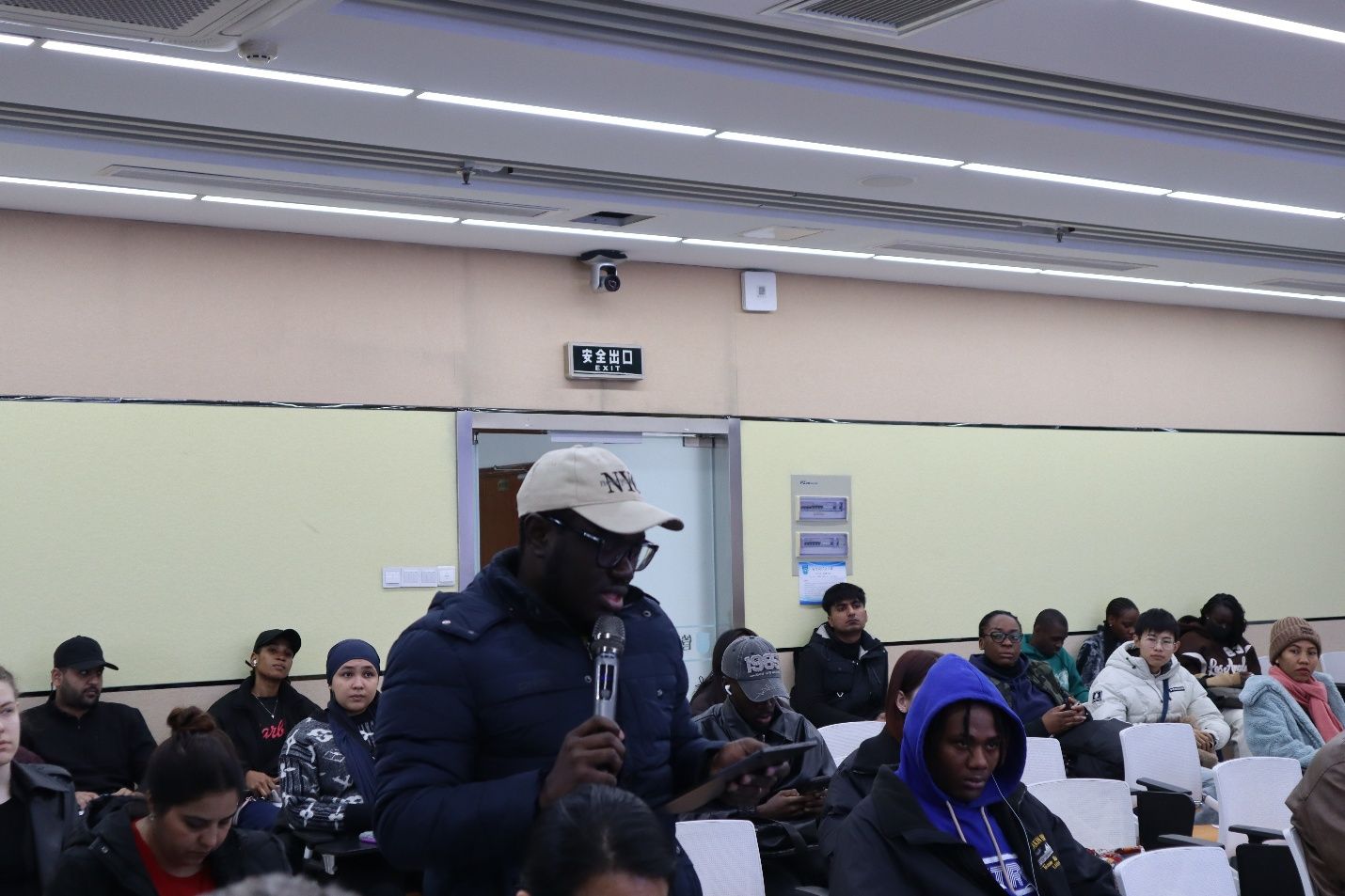
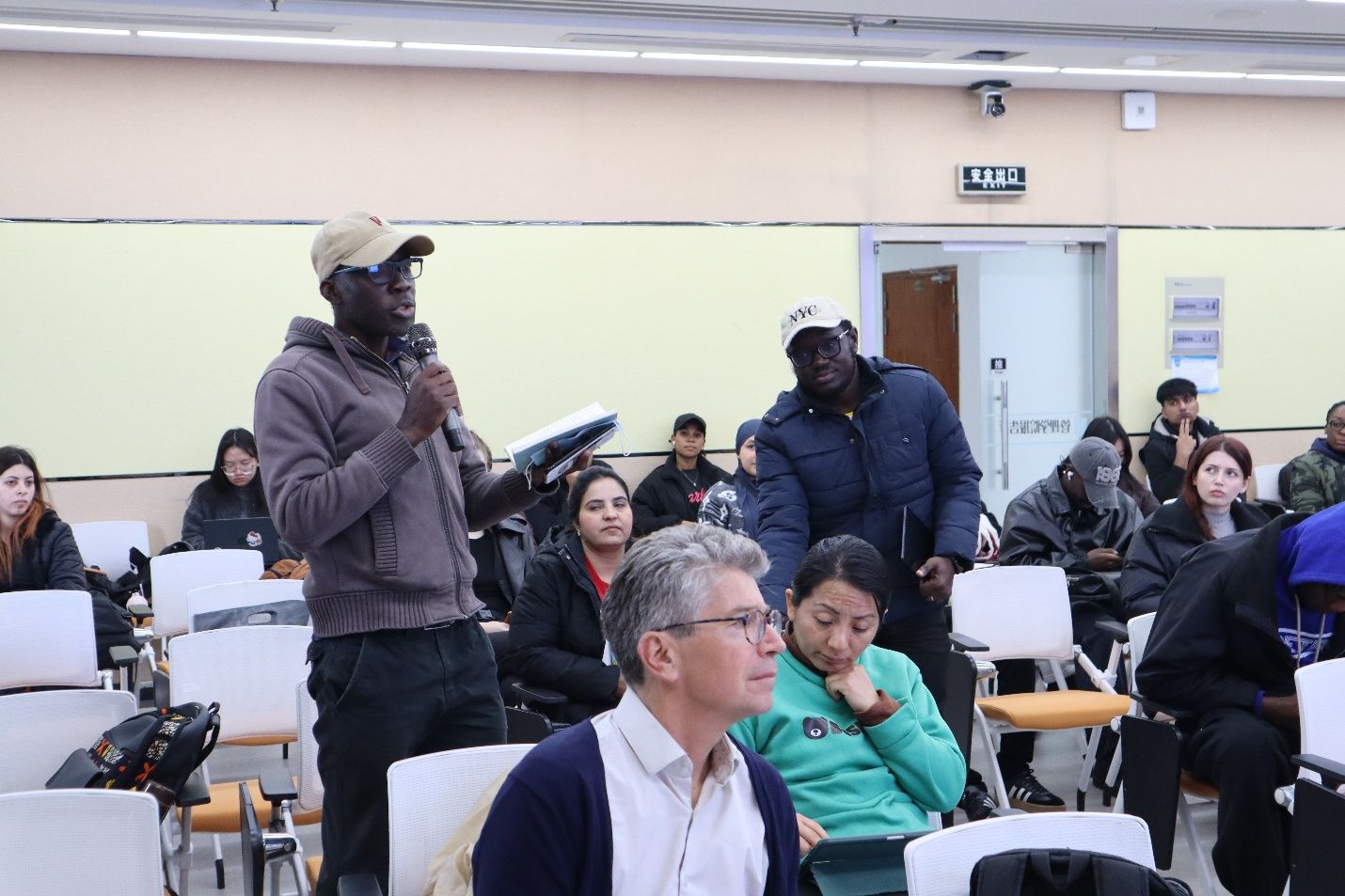
The floor responded with pointed questions on policy, method and strategy. One participant asked how a competition authority should choose between promoting R&D cooperation and allowing a merger if the aim is not merely to protect domestic firms but to safeguard consumer welfare. Dr. Le Texier acknowledged that such a decision would be difficult for any policymaker. He pointed out, however, that in the study’s models price represents the value a consumer is willing to part with, and since consumers have alternatives to buy from, price implicitly carries information about welfare. Another participant asked the authors to justify their modeling choices over familiar alternatives such as the Cournot, Bertrand, Stackelberg and Hotelling frameworks. Dr. Le Texier explained that the study concentrates on price competition rather than quantities. Because its assumptions already made the analysis fairly complex, the authors opted for a basic model rather than complicate it further. A third participant noted that the dominant firm cuts its R&D under both arrangements, yet in some conditions would actually prefer to face a merger rather than R&D cooperation. Why, he asked, would the big firm want its rivals to merge? Was it because cooperation sets off a more aggressive R&D race than a merged entity would? Dr. Le Texier agreed that this intuition largely holds. When small firms cooperate on R&D, they share their efforts and lower their costs, which makes them tougher rivals on both price and innovation. A merged firm, by contrast, has more pricing power and therefore poses a softer competitive challenge, which is why the big firm may prefer it.
The session ended on the question Dr. Le Texier himself posed at the close of his talk: with the digital giants already so far ahead, is it too late to promote either route? It was a fitting end to two days that brought French economists to Zhenjiang to examine how competition, incentives and technology interact and gave students and faculty fresh questions to carry into their own research.
|