Can Sanctions and Oaths Deter AI-Assisted Cheating? A Rennes Economist Brings Experimental Evidence to the School of ManagementPublished Time:2026-11-24 Views No.:
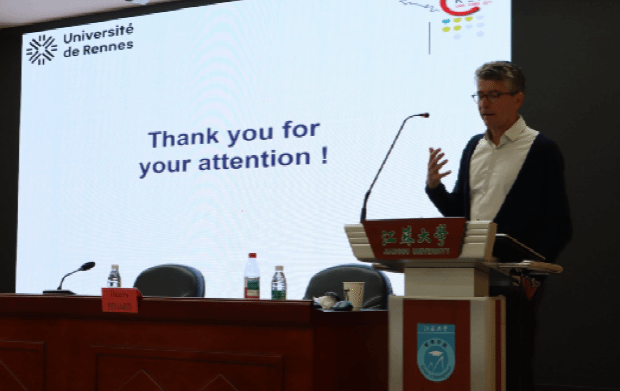
On November 10, 2026, the School of Management hosted the first session of a two-day lecture series. The visiting lecture was delivered by Professor Thierry Penard, Professor of Economics at the University of Rennes, Vice President of the University for Human Resources and a researcher at CREM, CNRS. His question is one now facing universities everywhere: when students are prohibited from using generative AI in assessments, how many use it anyway, and what can deter them?
Prof. Zhiwen Li chaired the series. The audience included PhD candidates from the School of Management, the School of Finance and Economics, the School of Computer Science and Engineering and other departments, together with master’s students in Management Science and MBA students. Prof. Penard presented a laboratory experiment in which students took a general-knowledge quiz under different conditions: no AI; AI available on the platform but prohibited and unmonitored; AI prohibited with a chance of sanction; and AI prohibited after signing an oath. Each condition ran under both a pay-per-answer scheme and a tournament scheme. About two-thirds of participants used AI even though they knew it was banned, which artificially boosted their performance. Both sanctions and oaths substantially reduced the practice, and the study also found that participants’ intrinsic morality and their beliefs about how honest others would be were important determinants of the decision to cheat.
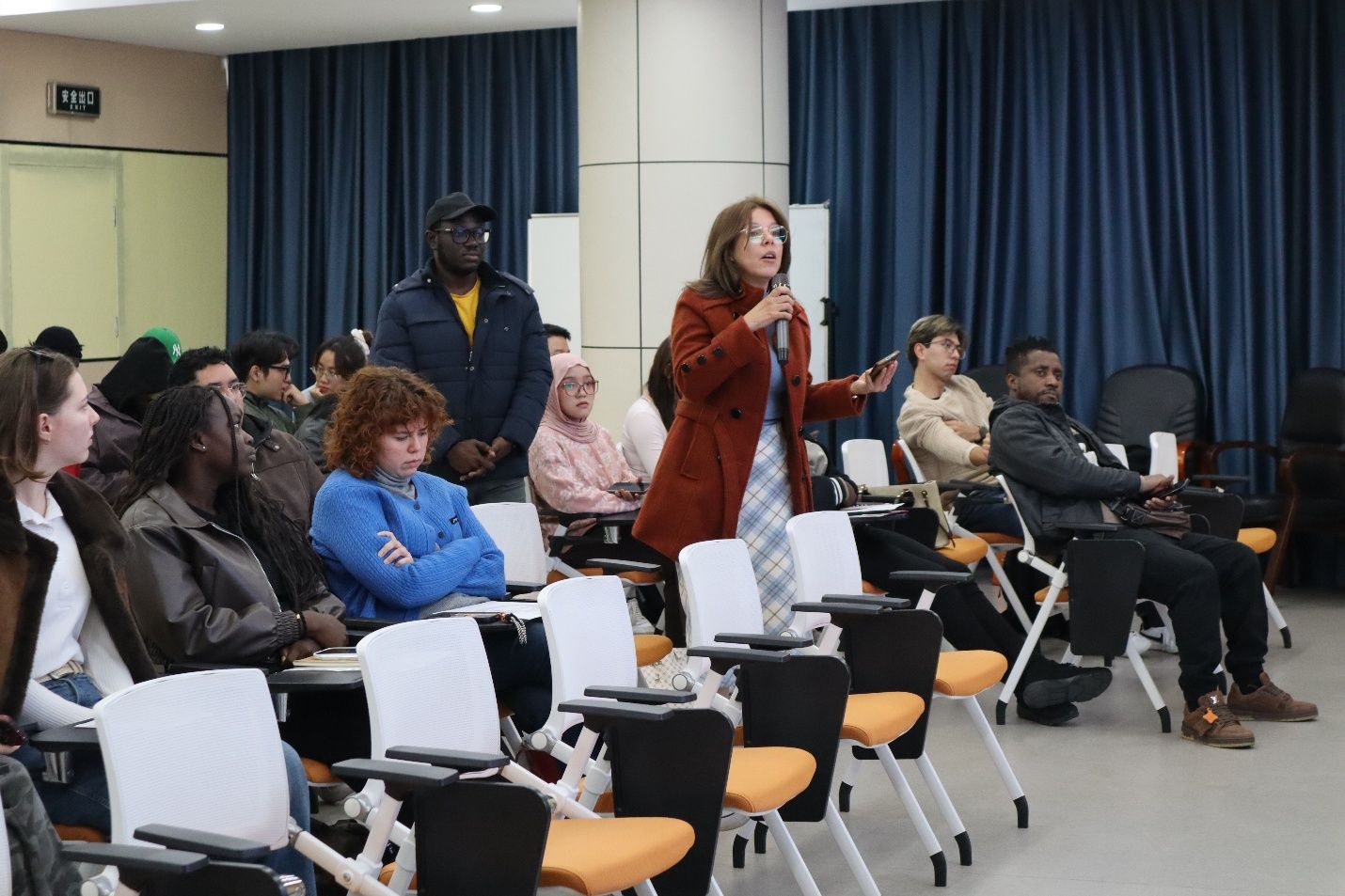
The discussion that followed was lively, with students probing the study’s design before turning to its wider implications. One participant argued that placing AI on the exam platform may have invited the very behavior being measured and suggested disabling it and tracking external devices instead. Prof. Penard acknowledged the merit of the idea but explained that recording or monitoring participants would have raised ethical-clearance concerns, so the authors adopted the design as reported. Another participant asked whether the competitive urge itself, rather than the competitive setting, drove the higher cheating. Prof. Penard explained that the study separates the two: tournament pay did not by itself increase cheating, but participants with a stronger preference for competition were more likely to use AI. On academic ability, he said the authors expected weaker students to cheat more, yet the lowest performers did not. AI actually widened the spread in performance, since gains depended on prompting skill and prior experience, and a paid AI subscription was a strong predictor of cheating. Broader questions followed. Asked whether universities should redesign assessment rather than demonize AI, Prof. Penard replied that the academic community is not against it. The emphasis, he said, is on using AI to strengthen students’ skills rather than depending on it, because once a student cannot perform a task without it, the essence of learning is lost.
A final question invoked Vygotsky’s Zone of Proximal Development, the gap between what a learner can do alone and with help and asked why tool-assisted support in an exam should count as cheating. Prof. Penard noted that the frameworks differ: his study rests on behavioral economics and examines the morality and incentives behind attempts to gain an undue advantage. The session left participants with a lasting message: whether AI helps or harms learning depends less on the tool than on the incentives, values and expectations around its use. |